
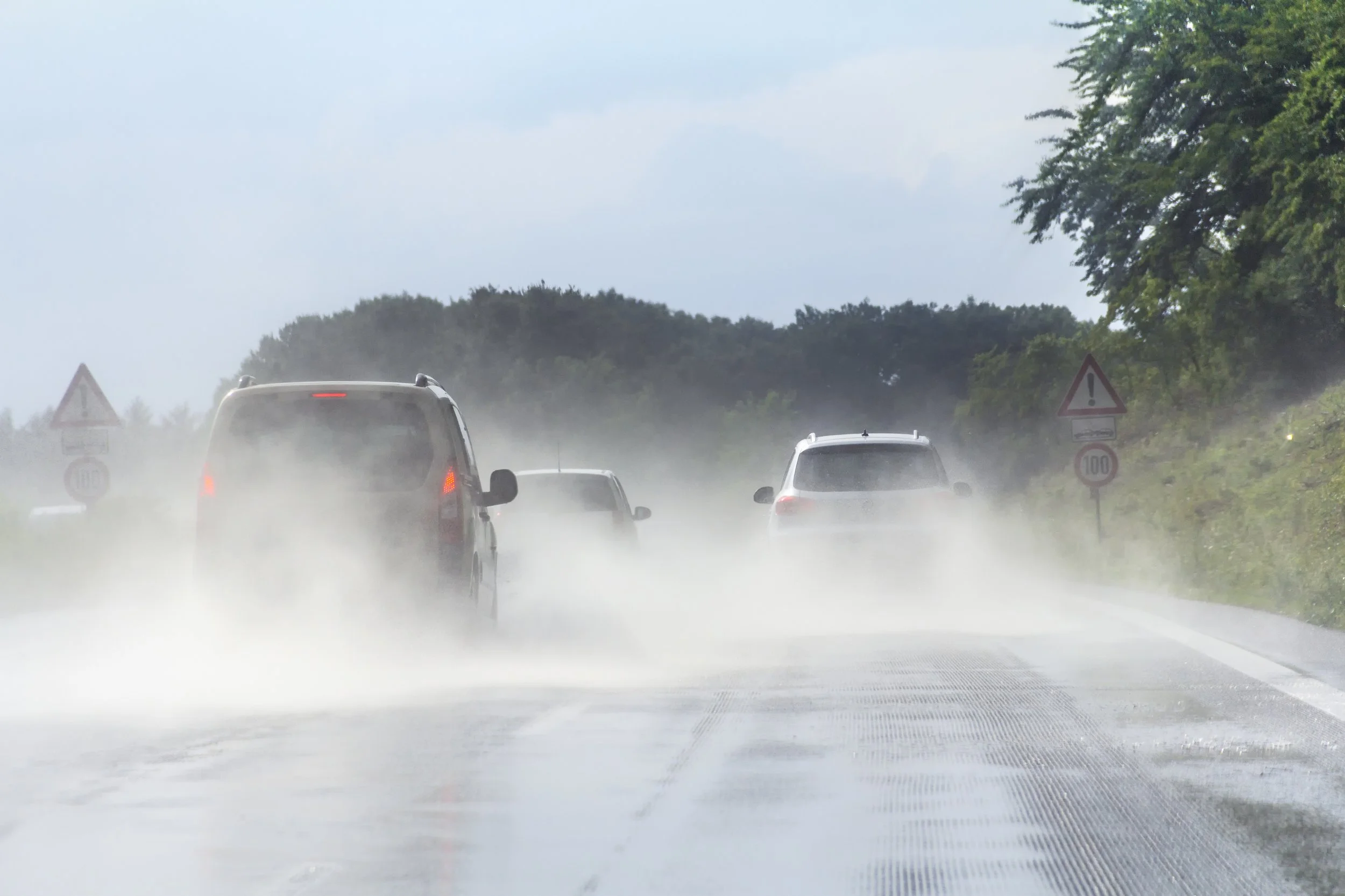
With rain being the primary factor in 90% of all weather-related road accidents, the issue of reduced visibility due to spray becomes a real safety concern.
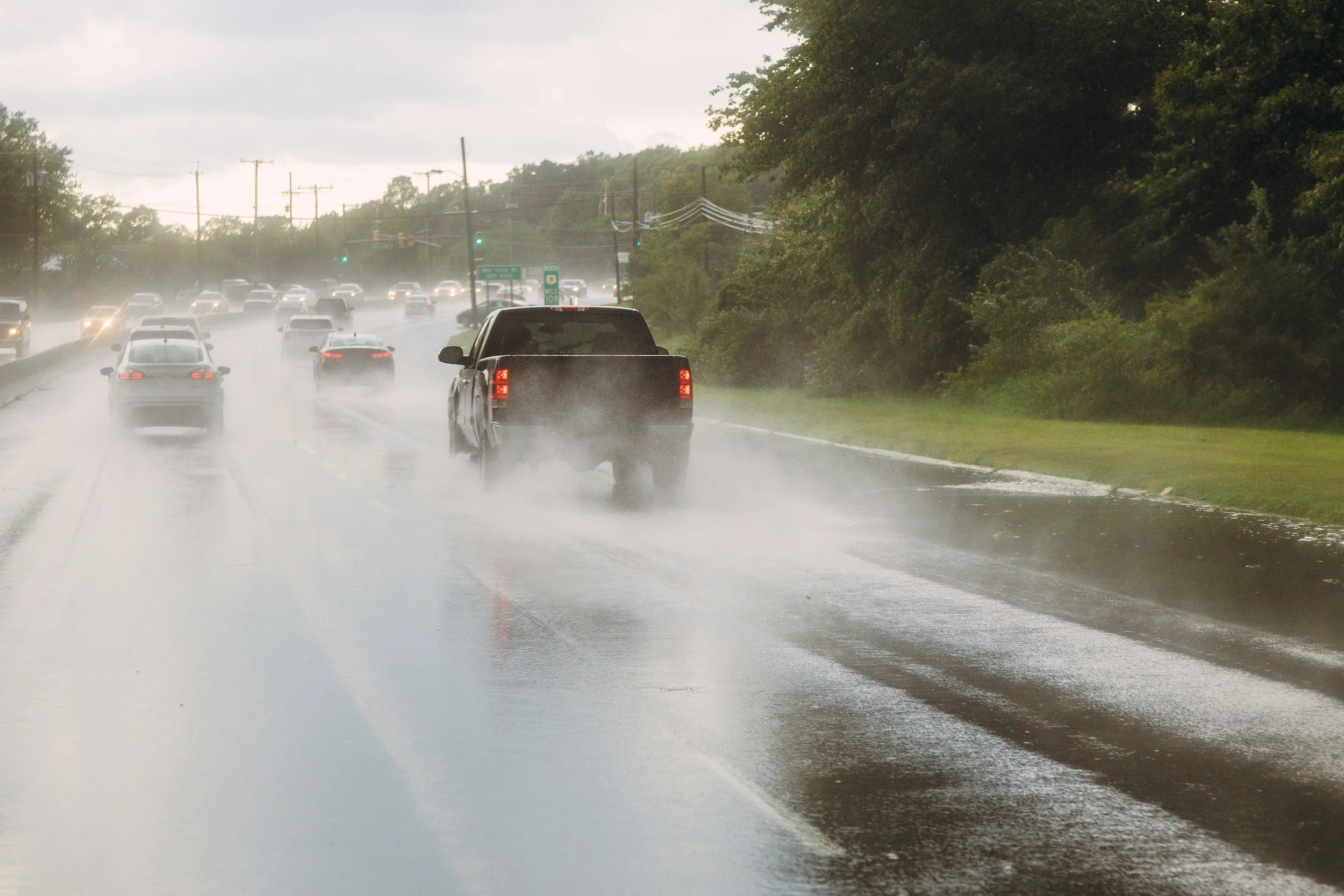
Despite being caused by all vehicles, governments and road users are accepting that the use of anti-spray mudflaps on HGVs and trailers offer the only remedy to the hazards caused by spray.
Spray, globally tolerated

1977
The House of Lords acknowledged spray as a serious problem, and despite years of research no effective technical way of reducing it had been found.
More recently it has been estimated that accidents involving heavy vehicles on wet roads in the UK cost +£160 million.

1995
A German Lorry nuisance survey found that 88% of car drivers saw truck spray as a real danger. 92% of truck and bus drivers regarded spray as a danger for car drivers. 64% wanted the government to impose more.

1997
The European Safety Campaign Against Road Spray (ESCARS), and much later the European Transport Safety Council (ETSC) tried to mitigate spray from large vehicles.
The total reported costs of weather-related road deaths in 2023 were over €17 billion – with more than €1.9 billion resulting from truck accidents.
The Australian National Transport Commission Heavy Vehicle National Law – Regulation Impact Statement, concludes that “The scientific evidence suggest that spray suppression devices built to the standard are currently of limited effectiveness in real-world conditions.”
2011


2023
The National Safety Council reported that the cost of accidents across the US that involved heavy vehicles on wet roads was almost $2.7 billion.